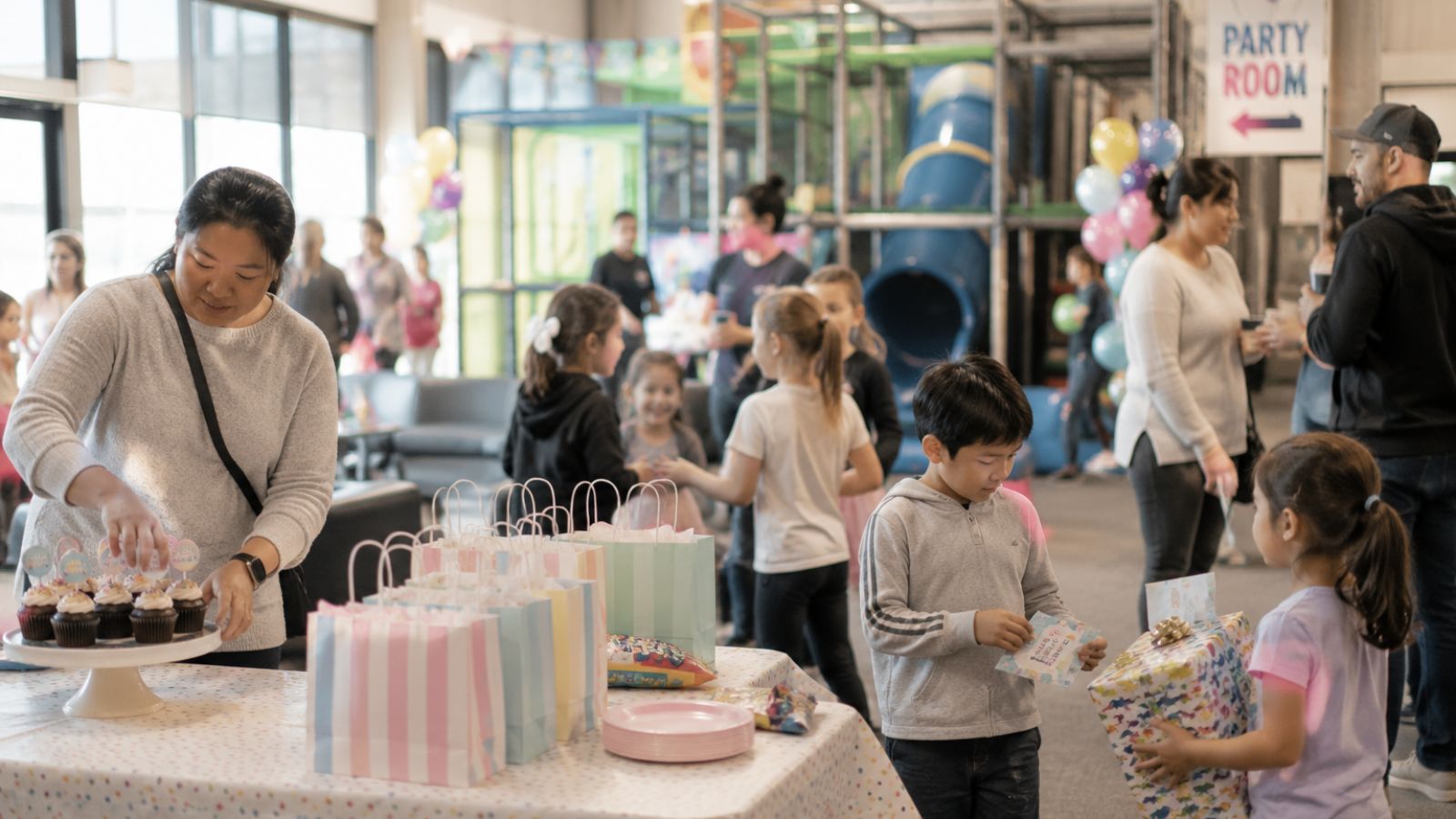
You've said yes to a birthday party, and now the questions start piling up. How many kids? Home or a venue? What does it actually cost, and what happens if it rains? None of this needs to be complicated, but it does need deciding in the right order — otherwise you end up choosing a theme before you've worked out where the party's even happening.
Key takeaways
- Set your guest count and total budget before you look at venues, not after.
- A home party costs less but you own setup, food and clean-up; a venue costs more but takes those off your plate.
- Ask any venue what's actually included, how long you have the space, and what their deposit and cancellation terms are — get it in writing.
- Book the venue or date first. Theme, cake and invites all follow from that.
- Have a wet-weather or low-energy backup plan, especially for outdoor parties.
How many guests should you invite, and what should it cost?
A common rule of thumb is one guest per year of your child's age — so a five-year-old's party might sit around five to six friends. It's a useful starting point, not a rule, and plenty of families go bigger or smaller depending on the child, the venue capacity, and what you can realistically manage on the day.
Decide your total budget before you fall in love with a venue or a theme. It's easy to add "just one more thing" — party bags, a photographer, a bouncy castle — and watch the number creep. Setting a ceiling first means every add-on is a conscious choice, not a drift.
Timing matters too. For younger children, two hours is usually plenty — long enough for games, food and cake, short enough that nobody melts down before the candles are blown out. Older kids and venue-based activities (trampolining, swimming, laser tag) often run a bit longer because there's a structured activity to fill the time.
Should you host at home or book a venue?
At home is the cheaper option, and it's the most flexible — no time limit, no travel for your child, and you can lean on familiar toys and spaces if things go quiet. The trade-off is that you own everything: setup, entertainment, food, and the clean-up afterwards. If the weather turns and the party was meant to be in the backyard, you also need a plan B indoors — a few rainy-day activity ideas are worth having ready even if you're hosting an older child's party.
A venue — a trampoline park, pool, play centre, animal farm, or similar — costs more but hands over the logistics. Many include a party host, a dedicated room, and sometimes food, which takes a lot of the day-of pressure off you. It also gives kids a change of scene and a structured activity, which can mean less refereeing for you. Browsing things to do or kids' activities near you is a good way to see what's actually available in your area before you commit to a theme.
If a play centre or trampoline park route appeals, it's worth reading through how to plan a stress-free birthday at a play centre for the specifics of that format — bookings, party packages and what's typically included.
What should you ask a venue before you book?
Venues vary a lot in what "party package" actually means, so get specifics rather than assuming. Useful questions to ask directly:
- What's included in the price — food, a dedicated host, the party room, invitations, party bags?
- How long do we have the space, and is there a buffer for setup and pack-down?
- What happens if we have fewer or more guests than booked — is there a minimum number or a per-head charge?
- Can we bring our own cake, and is there a cakeage or corkage-style fee?
- What's the deposit amount, and what's the cancellation and refund policy if plans change?
- Is there a separate space for parents who stay, and is that included?
Get the answers in writing — an email confirmation is enough — rather than relying on what you were told over the phone. Deposit and cancellation terms are effectively a small consumer contract, and if a venue's terms seem unclear or one-sided, Consumer Protection has general guidance on your rights around deposits, refunds and cancelled bookings that's worth a skim before you sign anything.
Book the venue or the date first. Theme, cake and invitations all flow from that — there's no point designing invitations around a date the venue can't actually hold.
What about food, cake and allergies?
Party food doesn't need to be elaborate, but it does need to account for allergies and dietary needs among the guest list. Ask on the invitation (or in a follow-up message) whether any child has an allergy or dietary requirement, and plan around it rather than offering a token substitute at the last minute. If food is being catered by a venue, confirm they've been told about any allergies directly — don't assume it's been passed on.
Cake logistics are worth nailing down too: does the venue allow outside cake, do they need it a certain size or shape for their fridge or table space, and is there a fee for bringing your own. If you're baking it yourself, build in a buffer day in case something doesn't go to plan — a cake disaster the morning of the party is a stress nobody needs.
How do you keep the day low-stress?
A few habits make the actual day easier, regardless of venue:
- Confirm numbers with parents a few days out, not the morning of, so catering and seating are accurate.
- Have a running sheet for the two hours — arrival, activity, food, cake, open presents (or not), goodbye — even a rough one keeps the day moving.
- Delegate a task to another adult — photos, drinks, or door duty — so you're not doing everything.
- Build in a low-key buffer activity (colouring, bubbles, a simple game) for the lull between arrivals and the main activity.
- If it's outdoors or at a venue with an outdoor component, have a wet-weather alternative decided in advance, not improvised on the day.
None of this needs to be Pinterest-perfect. A party that runs on time, feeds everyone properly, and doesn't leave you exhausted before the cake's even cut is the actual win.
What's the easiest way to compare venues without ringing around?
If you'd rather not call around to a dozen play centres and venues asking the same questions, Smart Match lets you send one party brief and get replies from matching venues and entertainers near you in one place — useful for comparing prices and inclusions side by side rather than juggling separate phone calls. You can also browse birthday party options directly if you already know roughly what you're after.
FAQ
How many kids should I invite to a birthday party?
A common guide is one guest per year of your child's age, though plenty of families adjust up or down based on venue size, budget and what suits their child. There's no fixed rule — use it as a starting point rather than a target.
Is it cheaper to have a party at home or book a venue?
Home is almost always cheaper since you're not paying for space, a host or catering, but you take on all the setup, entertainment and clean-up yourself. A venue costs more but usually includes the space, sometimes food, and handles the logistics and clean-up, which can be worth it for the time and stress it saves.
What should be in a venue's cancellation policy?
At minimum it should state the deposit amount, whether it's refundable, the notice period needed to cancel or reschedule without penalty, and what happens if guest numbers change. If a venue can't give you clear answers on these before you pay a deposit, treat that as a flag to ask more questions or look elsewhere.
How long should a kids' party run for?
Two hours is a common length for younger children's parties and is usually enough for games, food and cake without kids (or parents) running out of steam. Venue-based parties with a structured activity, like swimming or trampolining, sometimes run a little longer to fit the activity in.
Next step: Decide your guest count and total budget first, then either browse party venues and entertainers directly.